Frequently asked questions
Most frequent questions and answers
What is Generative AI
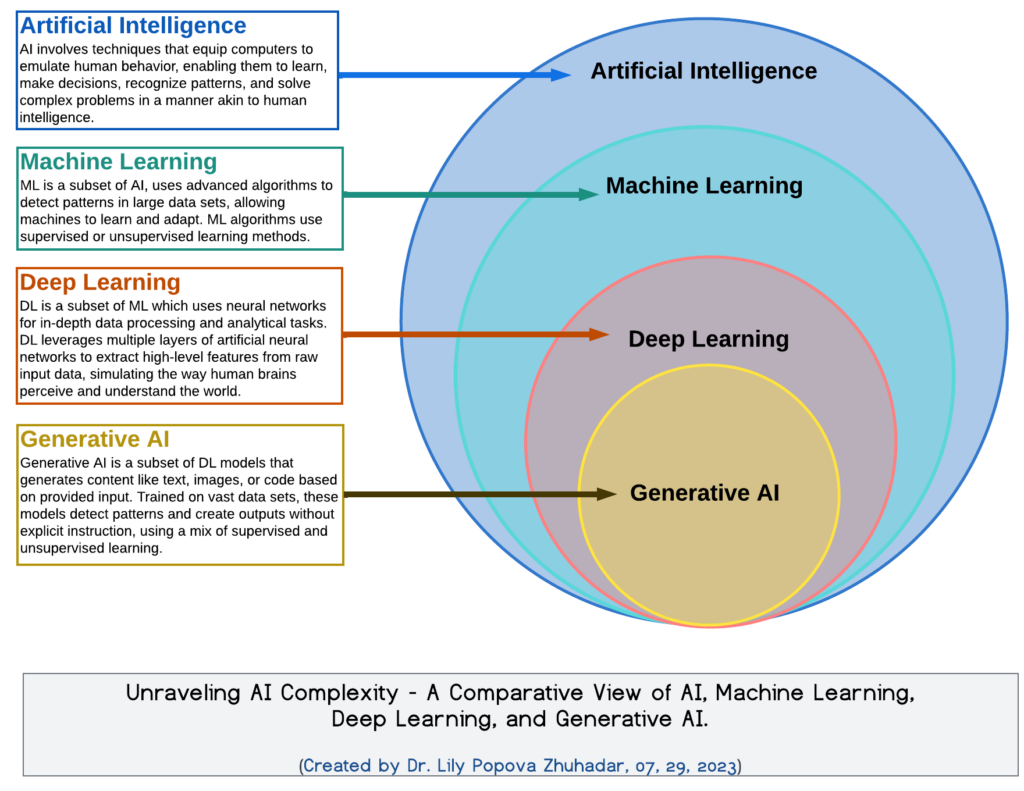
AI that can create new content, text, images, audio and videos, etc. It also acts like digital assistance to help with writing, summarising, and designing.
What is Prompt and Prompt Engineering
Prompt is the text input (question and instruction) that we give to Gen AI tool.
- Craft clear instructions : Avoid vague instruction
- The way we ask determines the response: Save time
- Works best when given context, role and constraints : Makes more reliable
How Gen AI works
- Learns the pattern: Studies massive datasets to understand language, images and content structures.
- Predicts Sequence: Determines what should come next in words or creative elements
- Creates Content: Generate human-like texts, images, audio and videos from simple prompts.
What is Natural Language Processiong (NLP)?
Why Generative AI Matters Today?
- Accessibility Revolution: Free user-friendly platform available for everyone
- Creative Possibilities: Generate stories, images, videos and professional content easily
- Education impact: Help in creating lessons, assessments
What is Machine learning (ML)
Machine learning (ML) is a subset of AI that enables systems/programs to learn from experience, patterns, etc., in the data rather than requiring a human to write step-by-step rules for every single task. You give computer thousand of examples and correct answers. The computer figures out rules and patterns on its own (without human teaching, like a recipe).
Algorithms such as Logistic Regression, Random Forests,XGBoost (eXtreme Gradient Boosting), and Support Vector Machines (SVMs) have been widely applied in psychiatry to predict treatment outcomes, relapse risk, and diagnostic classification based on clinical and neuroimaging data
What is AI? (Artificial Intelligence)
AI is the overarching field concerned with creating programme/system capable of performing tasks that typically require human intelligence, such as perception, reasoning, problem-solving, and decision-making. By using AI, computers and software can perform tasks that normally require human reasoning: learning through experience, pattern recognition, decision-making, and problem-solving. This is in contrast to traditional learning, where the rules are set beforehand.